26. Burnham on Crouch to Rochford

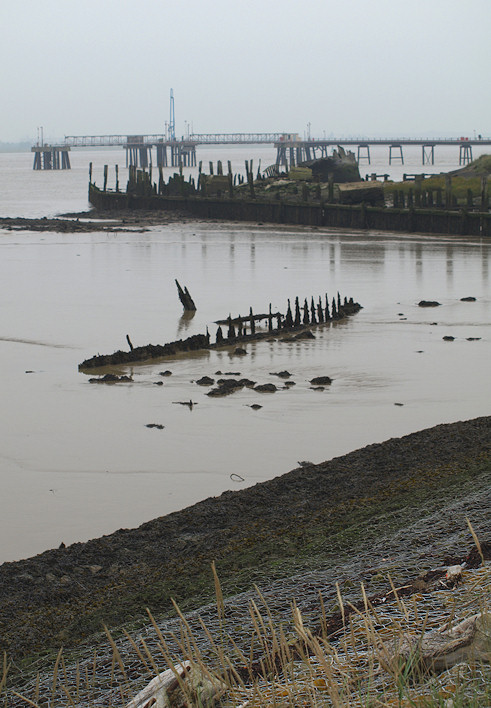
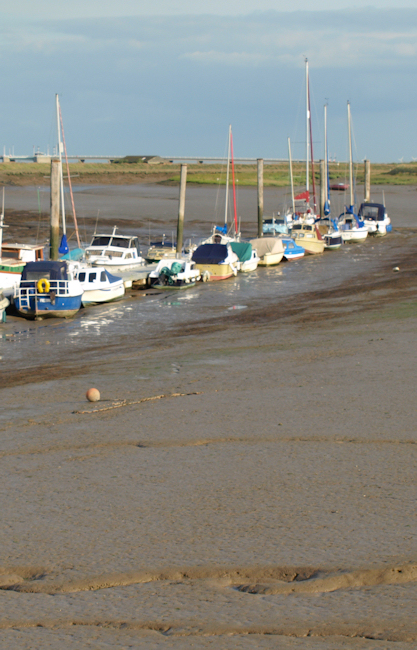
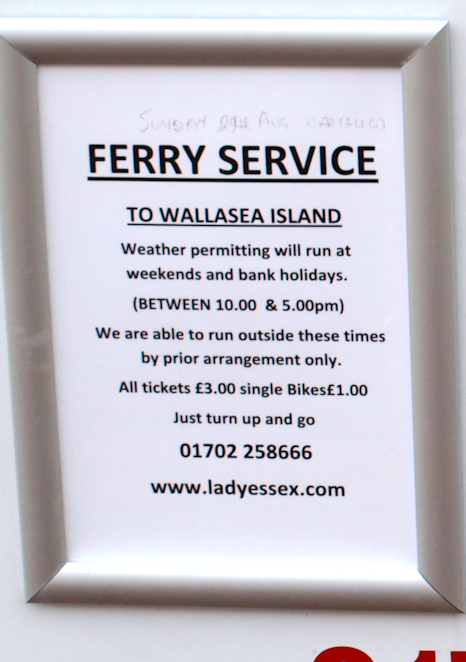
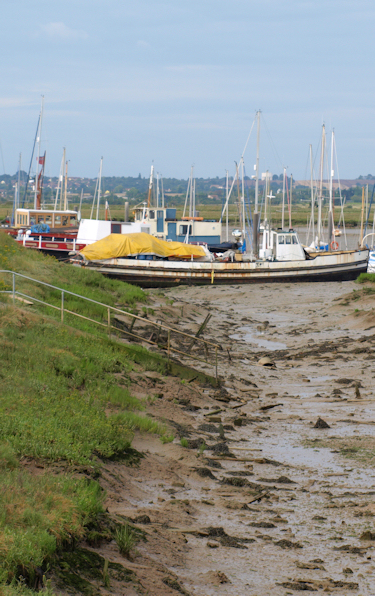
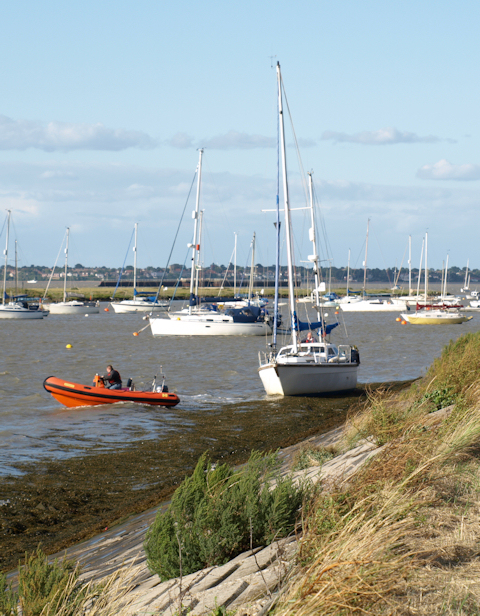
Burnham Ferry, Ruth's coastal walk There is a summer ferry service from Burnham-on-Crouch to Wallasea Island. I sit on a bench outside a pub, waiting. There were revellers here last night, but all is quiet now. It is just after nine in the morning; an early start because we stayed overnight in a hotel in this town. It is of little benefit to be here early – I have already telephoned to check the passage times and was told the captain hadn’t arrived yet. The ferry doesn’t start running until ten o’clock.

[Please note: the ferry has recently changed hands. For current contact details, see the comments section below.]

By the time the small boat arrives, Continue reading

Posted in 04 Essex | Tagged , , , , , , , , , , , , , , , , , , , , , , , , , | 5 Comments

25. Tillingham Marshes to Burnham on Crouch

Signpost at beginning of walk, Tillingham Marshes, Ruth's coastal walk
Leading East from Tillingham is a narrow road – a track really. It winds around a few bends and, opposite a telephone box, there is an impressive farm entrance. Next to this farm entrance, so insignificant in appearance you can easily miss it, is a small track leading directly due East. At a bend in this track, is a signpost. Here starts a public right of way that runs for a mile, passing through Tillingham Marshes, to the sea wall.

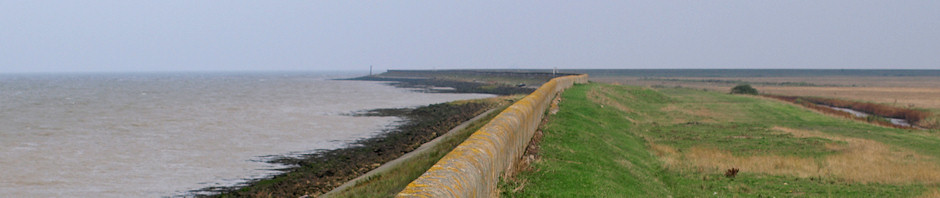
Why am I taking this route? The coast path itself runs uninterrupted for 17 miles from Bradwell Marina to Burnham on Crouch. South of St Peter’s Chapel, there is no other place in the Dengie Peninsula where a public road comes within a mile of, and gives footpath access to, the coastal path; not until you reach Burnham on Crouch itself. Therefore, I am rejoining the walk at this unlikely spot to make this section of the walk a manageable distance. Burnham is now only 9 miles away.

The footpath runs for a mile, and has been diverted by the farmer, taking a course further South then the route marked on the map and involving a right angle turn around the bottom of a field. Very few people walk this path and the route is unclear. Luckily, I have been here before and I find, among the tall grasses, the small bridge that crosses the culvert. Then I make the short climb to regain the coastal path running along the top of the grassy bank.

Endless coastal walk, Dengie Peninsula, EssexInitially I enjoy the walk. Being up on the bank, close to the sea, breathing fresh air, gives me a an energy boost. The sun is shining and it is unseasonably hot for September.

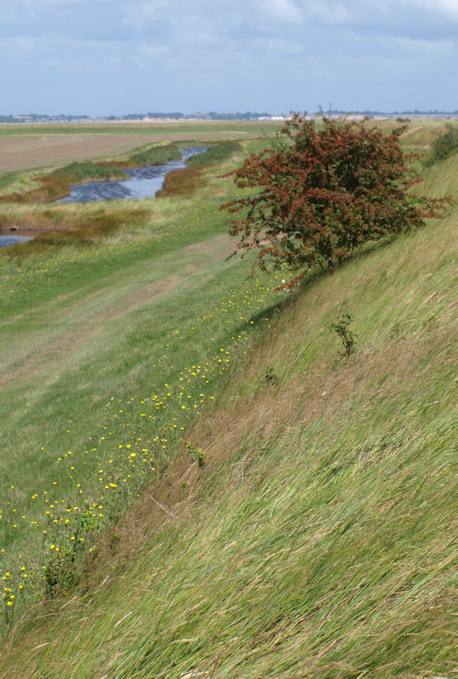
To my left are marshes, covered in uniform green vegetation. They stretch almost as far as the eye can see. Beyond is a small sliver of shining sea and the distant glimpse of an occasional big cargo ship. To my right is a grassy track running parallel to the sea bank, then a watery culvert and then farmland – flat and featureless. I see nobody.

The sea wall seems endless. The view is monotonous.

I am bored and my energy drains away. This is hard work.

Mud, Denghie Peninsula, Ruth's coastal walkThen I reach an area where the grassy bank gives way to a concrete wall and path. Here the sea comes nearer and there is mud with interesting patterns. I must be bored, I think to myself, if I find mud interesting. But the mud makes a welcome change from the featureless marsh vegetation and I enjoy looking at the patterns – the sinuous curves, the ripples and the furrows.

Sea wall, Dengie Marshes, Ruths coastal walkI stop for lunch on an area of wall that has been widened to form a semicircle. A handy, nearby blackberry bush provides a tasty dessert. And, what a relief, I can see the glimmer of the beginning of the River Crouch ahead of me. That distant view of the river tells me I am near the end of this stretch of walk.

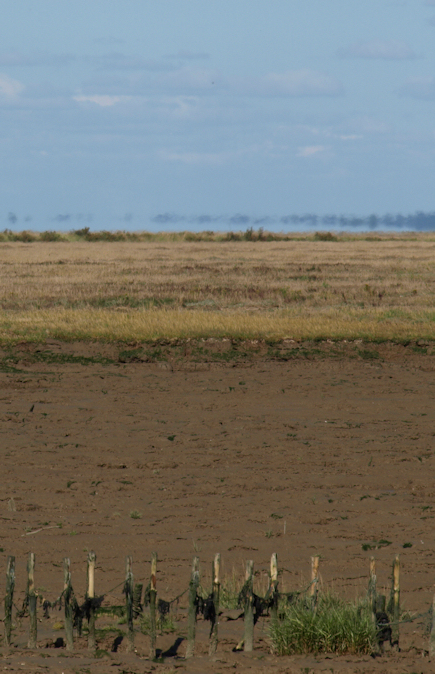
Looking back the way I have travelled, I am amazed to find that I can still see St Peter’s Chapel. And beyond I can just make out the Blackwater River. But wait; there is something very odd here. The river level seems unusually high, higher than the sea level beyond it. And appears to be flooding the far bank. I can see bushes, or trees, with their roots apparently hidden by the water.

Distant Mirage, River Blackwater, Ruth's coastal walkWith the telephoto lens of my camera, I have a clearer view of the far bank of the river, with trees and bushes floating above hazy, blue water. And a sailing ship hovering, almost in mid-air. Very strange. Are my eyes playing tricks?

Then I realise. This is a mirage. A genuine mirage.

I linger to take photos and enjoy this rare and intriguing phenomena.

A few miles further on, I come across another strange sight.

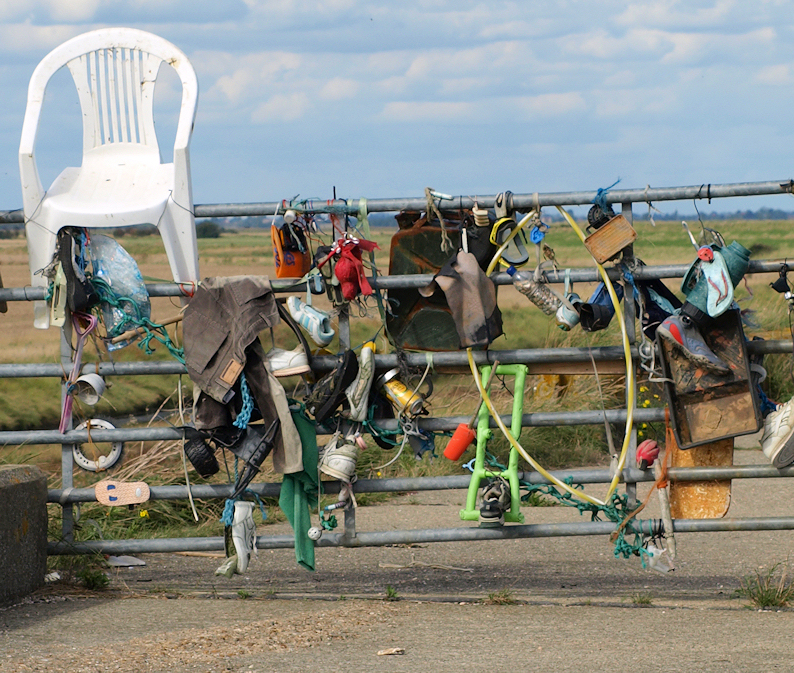
Decorated Gate, Ruths coastal walkThere is a gate across the concrete path. And the gate is decorated. It is covered in objects; ordinary objects such as a single flip-flop sandal, a sock, an empty can of lager, a pair of trousers, a number of trainers and, most incongruous of all, a white plastic chair.

I wonder if this is debris left over from some event. Or has each walker simply added something of their own to the gate, just as walkers in the hills add stones to a pile at the top of a peak? I consider adding some item of my own, but I have nothing spare in my rucksack; travelling light and carrying nothing unnecessary.

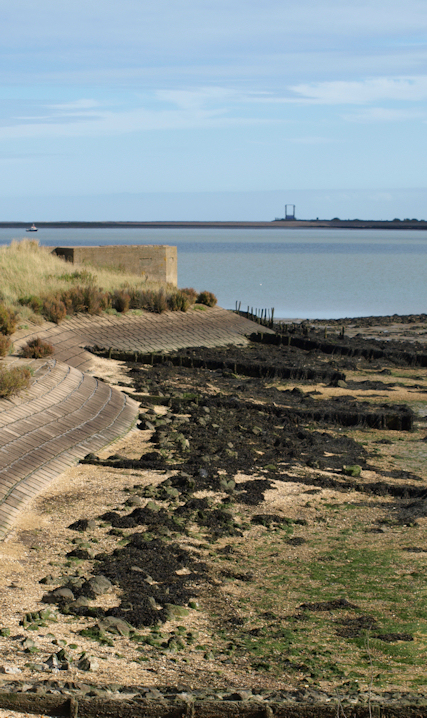
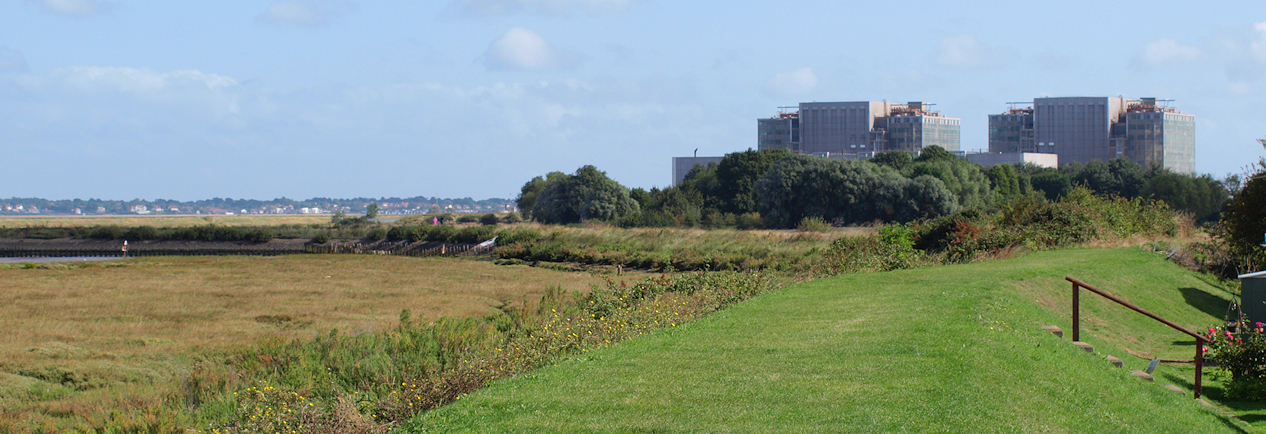
Pill-box sea defence, bank of River Crouch, Ruth's coastal walkContinuing, I reach the mouth of the River Crouch and enjoy watching the sailing boats. Along the bank of the river I come across defensive structures from the 2nd world war – pill-boxes. In some places, I notice a duo of pill boxes, with one facing the river and the other facing inland, both built into the river bank, back to back.
Defence structure, River Crouch, Essex
And here, in the fields, is a bigger structure that I believe must date from the war, but I am not sure. There are holes for guns and for keeping lookout. The buiding has a hexagonal shape giving 360 degree coverage of the surrounding countryside.

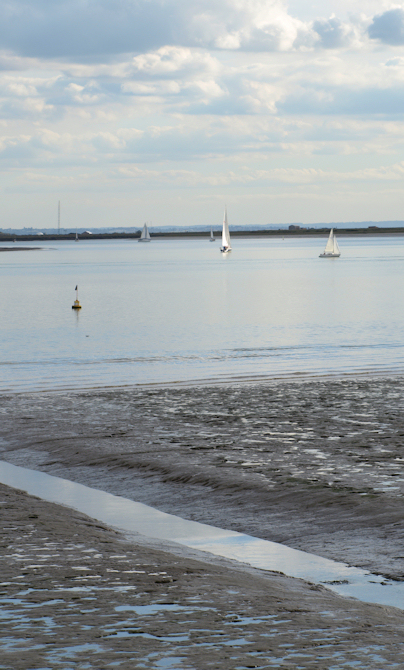
sailing ships on River Crouch, Essex, Ruth's coastal walkI enjoy this section of the walk. There is plenty to see. It is cooler now, the sun is behind clouds, and there is a strange, pale-blue light, giving an ethereal appearance to the water and the sailing ships on the river. There is hardly any wind. The tide is out and there are no waves. The ships move lazily across the water.

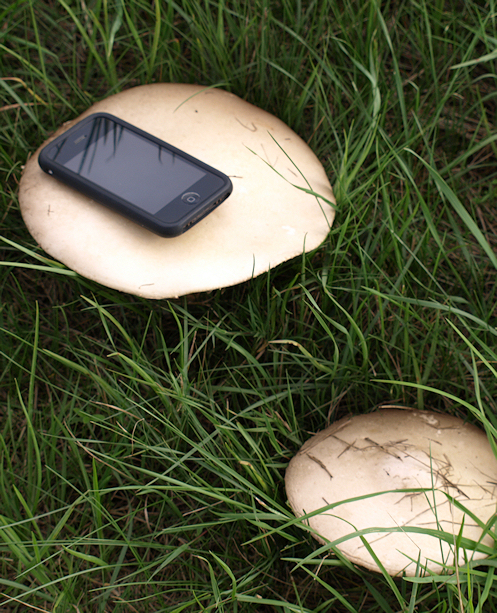
Giant mushrooms, Ruths coast walkSeeing some large, white, circular objects in the grass, I stop to investigate. These turn out to be enormous mushrooms. They look edible. In fact, they look delicious. I must be getting hungry. I balance my iPhone on the top of one. It is as large as a dinner plate. You could feed a whole family from this one mushroom.

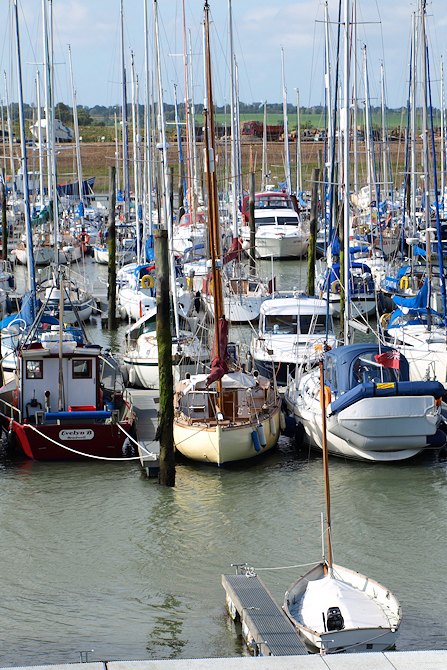
Continuing, I reach the outskirts of Burnham on Crouch. There is a path along the river front, weaving between shipyards, running along the back of the yacht club, and cutting through small alleyways. Pubs overlook the river and there are people out enjoying an early evening drink. After the emptiness of the Dengie area, I am excited by the people and the energy of this vibrant little town.

This is the end of my journey. Tonight we are staying in a pub in the town. Tomorrow, I am planning to take the ferry across to Wallasea Island and the next phase of my journey along the winding Essex coastline.


Miles walked = 11
Mirages seen = 1
Boring time = 2 hrs
Interesting time = all the rest

Posted in 04 Essex | Tagged , , , , , , , , , , , , , , , , , , , , | 20 Comments

24. Bradwell to Tillingham Marshes

Marina at Bradwell Waterside, Ruth's coastal walk, Essex Bradwell Marina is quiet today in the early morning light. Yesterday the ships were screaming as the wind howled through their rigging. Today, there is a stiff breeze, but the ships are silent.

I wonder about the ship I saw being blown up against the sea wall yesterday. Did the small motor boat succeed in towing it out of trouble? For a moment I am tempted to go back and see if it is still there. But that would take me across the muddy development area and in the wrong direction. So, I walk along the sea wall, heading East and skirting the edge of the marina.

Then I see it. The same boat. I recognise the name. It is up on a hoist, hull exposed, resting gently in a quiet corner. There appears to be no damage. I feel relieved – at least I know the outcome and the ship is unscathed.

River bank, towards Bradwell power station, Ruths coastal walk
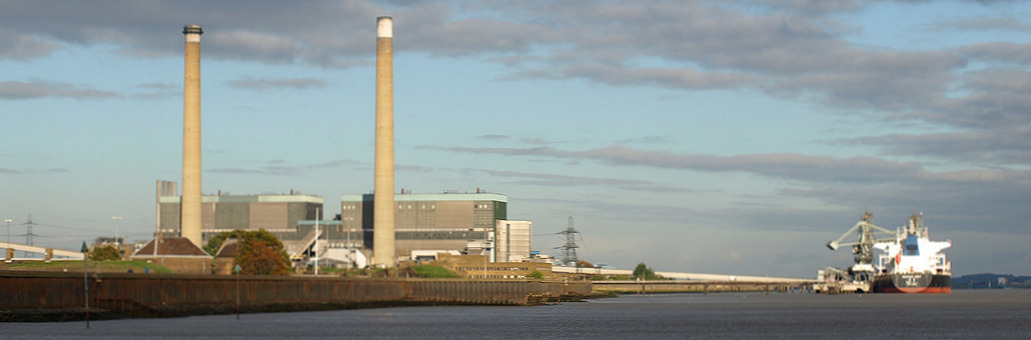
The sea wall winds towards Bradwell power station and the twin blocks of this station are my constant companions for this morning’s walk. There are people out enjoying this lovely bank holiday Monday – walking with dogs along the sea bank for short stretches. Some people have properties that back onto the bank, with gates from their gardens leading up onto the walk.

I try not to think about adders. The grass is short and well trodden. I should be safe.

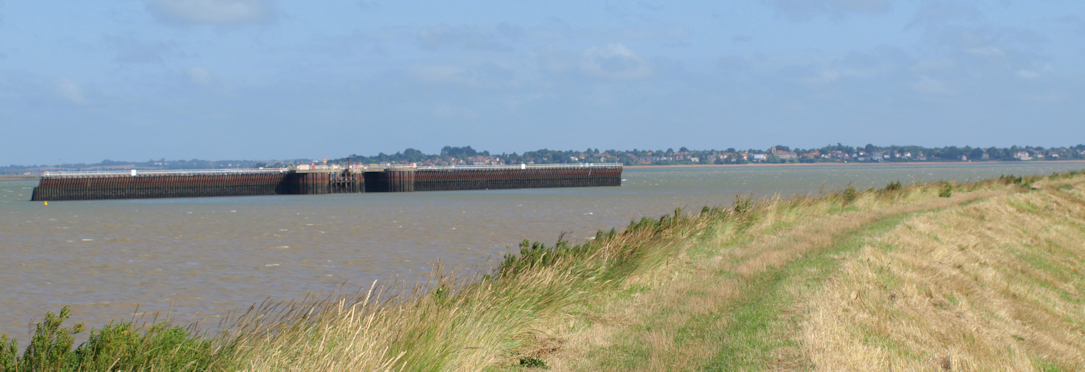
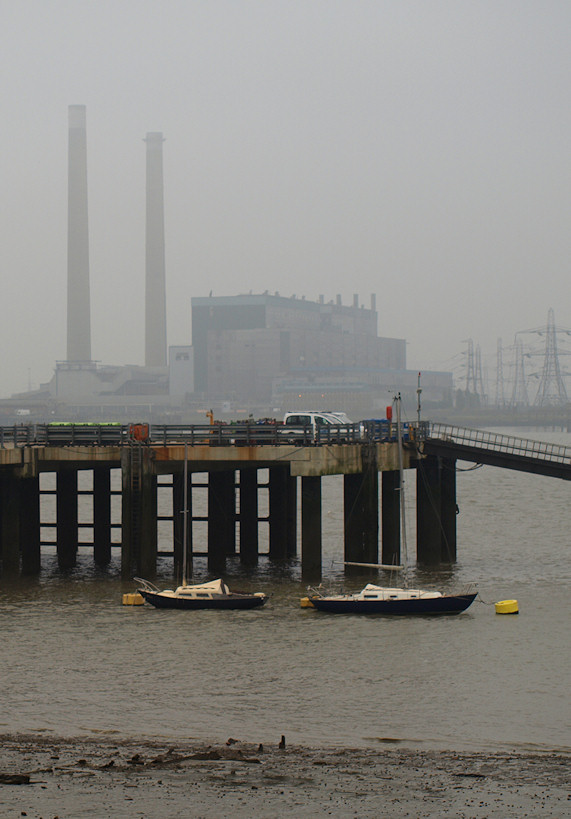
As I approach the power station, I see a long structure in the water – a jetty.
It rises, uncompromisingly, out of water – a long, tall shelf of metal – running parallel to the shore and completely separate from the mainland. The only way to and from it would be by boat. I wonder what purpose it served. There are no ships are here today. The structure looks impressive and I stop to take photographs.
Jetty off Bradwell Power Station, Ruth's coastal walk, UK

Now I pass the power station. There is no noise, no hum of machinery, no sounds of traffic or of industry. There are signs warning of private property, but no signs to indicate danger. I am surprised. Compared to Sizewell, where I walked some weeks ago, this is spookily quiet.

I later learn that Bradwell was a nuclear power station and is no longer functioning. It has been “decommissioned”. I wonder how much radioactivity, if any, still lurks inside it.

Beach at Bradwell Power Station, Ruths coastal walk
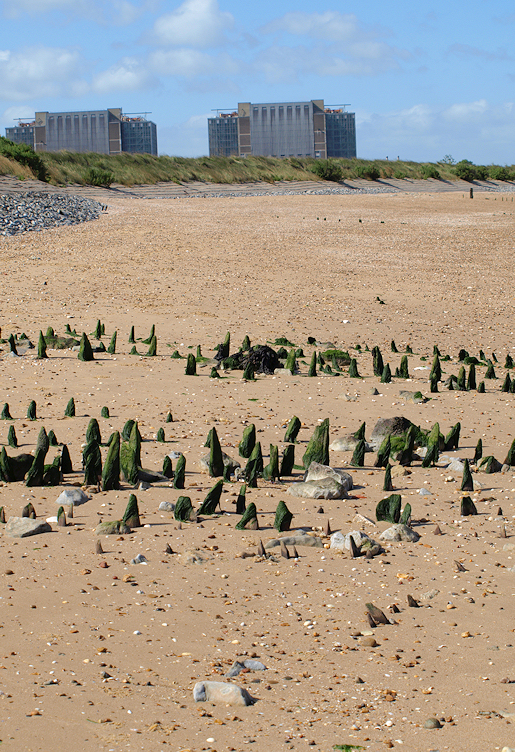
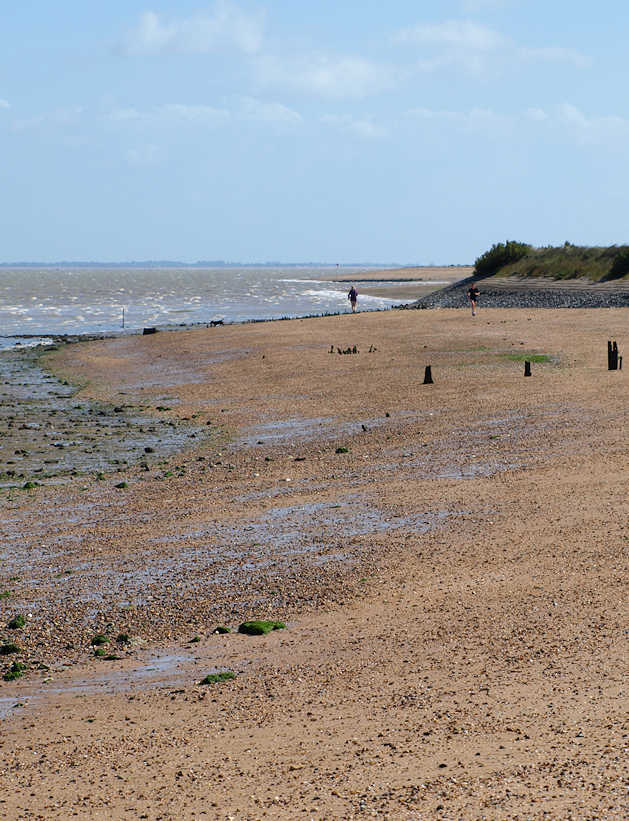
In the morning light these large, silent buildings are strangely attractive. And the area around them is truly beautiful. Here is a wonderful, pebbly beach, stretching out along this far reach of the Blackwater estuary towards the open sea. The breeze is fresh. The air is clear. I feel a sense of exhilaration. After so many miles of estuary and river banks, I am finally approaching the edge of the real sea again.

Beach towards Sales Point, Ruth's walk along Essex coastAs I walk along the beach, I realise it is covered in shells. Across the water I can see the shore on the far side of the River Blackwater – Tollesbury marshes and Shinglehead Point. It seems a long time since I strolled round those lonely marshes. In the further distance, I can see the shoreline of West Mersea with buildings and boats. It has been 5 days of walking and 65 miles since I left West Mersea. Yet I have only travelled a couple of miles as the crow flies.

Two miles in 5 days!

I fight off a feeling of despondency. I have had a wonderful time walking along the Blackwater River and Maldon was a delightful place. Since then I have learnt about vikings, encountered adders and coped with gale force winds. Now the open sea beckons and I will have miles of uninterrupted coastal walking, around the Dengie peninsula, before I reach the next estuary and the River Crouch.

Ahead of me I see a fisherman and I pass a couple of joggers. There are very few people around and I am surprised to find this place so isolated, given its wild beauty. There is a pill-box on the beach, proudly guarding the entrance to this river. An elderly gentleman is peering through one of the small windows. His wife waits impatiently on the beach. My father spent some weeks in a pill-box like this one, in Kent, waiting for the German invasion. I wonder if this man has similar memories.

Barges as breakwaters at Sales Point, Dengie Peninsula, Ruth's coastal walk.
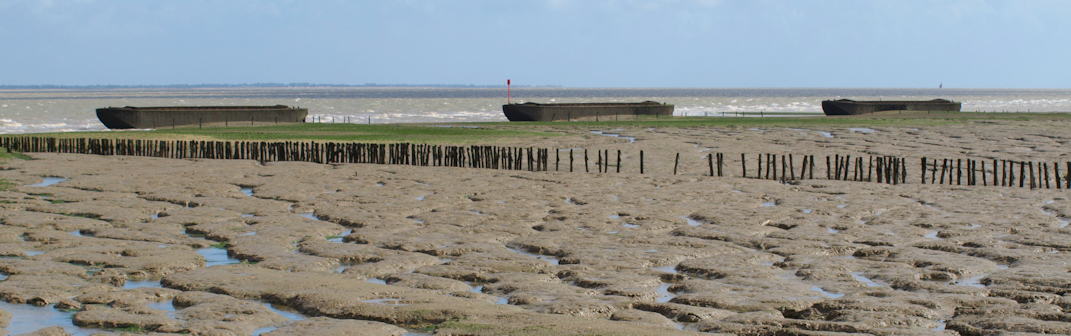
I continue along the sea wall. Ahead I see the beach gives way to an expanse of mud. I see some oddly shaped breakwaters beyond the mud – breakwaters that look strangely similar to barges. As I approach, I realise that is exactly what they are; sunken barges in a line, protecting this part of the coast from erosion. I have seen many different forms of coastal defence in my walk through Norfolk, Suffolk and, now, Essex. But this is a surreal sight.

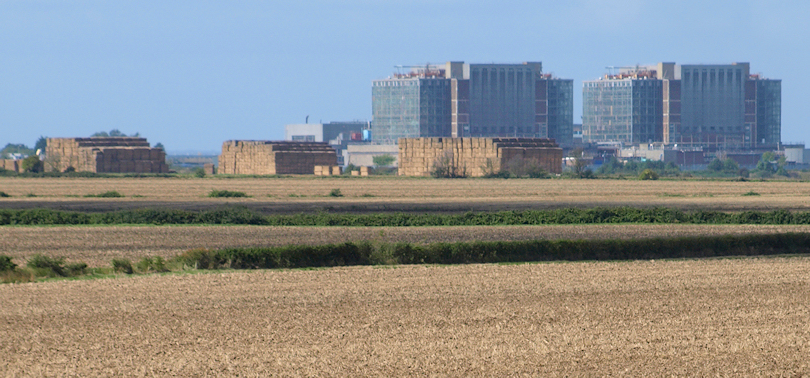
To my left are open fields with some giant haystacks in the distance and, beyond these, the twin buildings of Bradwell power station. I like the juxtaposition of these two contrasting rectangular constructions – the enormous haystacks and the industrial buildings – and I stop to take more photographs. I realise this will be my last real view of the Bradwell site. I feel strangely sad to leave the buildings behind. They have been my constant companions ever since I first spotted them across the water from Mersea Island. Bradwell and giant haystacks, Ruth's coastal walk.

Around the Dengie Peninsula, there is a coastal path stretching from Bradwell Power Station to Burnham on Crouch; seventeen miles of coastal footpath, with no villages, no towns and no marinas; along which the only building of any significance is St Peter’s Chapel.

As I walk around the point, the sea wall suddenly becomes crowded. Young couples and families are out walking. I find this strange because this area is not as attractive as the quiet beach I have just left, hidden around the corner. But the reason for the influx of sightseers is because I am approaching St Peter’s Chapel.

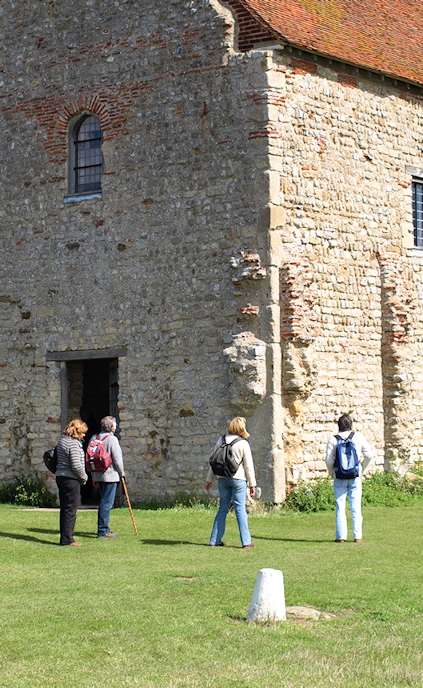
St Peter's Chapel, Bradwell, Essex, Ruth's coastal walk St Peter’s Chapel lies at the beginning of St Peter’s Way, a long distance footpath that follows the coast path for a short distance before turning inland. The Romans built an ancient fort here, Orthona, long since disappeared and now covered by marsh and sea. The chapel was built by St Cedd, who left Lindisfarne and came ashore here in 653. He built a “cathedral”, using stone from the old Roman walls, at the site of the old Roman gatehouse. As the years passed, the chapel fell into disuse and was later used as a barn, before being restored in 1920.

Unprepossessing from the outside, the inside of the chapel is simply decorated. But for me, the amazing thing is the powerful atmosphere that fills the place – an atmosphere of peace and serenity – along with a sense of being in a very, very old place.

I linger for a while, and sit on the sea wall nearby to eat a snack and have a drink.

Then, I start off along the official path – St Peter’s way – following the sea wall and heading South. Ahead of me lies fourteen miles of footpath with nothing en route, until I come to Burnham on Crouch.

Endless wall, Tillingham Marshes, Ruth's coastal walkSoon, I am alone. The St Peter’s Chapel tourists have been left far behind. The sun is slanting across the fields to my right. To my left is nondescript marshland, green and featureless. Beyond this is just a glimpse of bright sea. Notices declare this area to be a nature reserve. I see few birds, few plants; precious little of anything. My legs are tiring. The path stretches ahead towards the horizon. Occasionally, the bank takes a right angle turn, taking me nearer to the distant sea. Then another right angle turn takes me back inland again.

Bradwell Marshes give way to Tillingham Marshes. The view is the same. The intermittent sluice outlets, and an occasional bush, provide the only relief from the flatness of mud and fields. Ahead I see a shape on the wall. It must be another bush. It looks like a man, sitting down, but that must be just my eyes playing tricks. Then, as I draw nearer, I realise it is a young man.

He is sitting with a rucksack beside him and he is eating lunch, tucking into a yoghurt pot with a vigorous spoon. He hears my footsteps and looks up, rather startled.

“Hello,” he says, squinting up at me. I must be silhouetted against the late afternoon sun.

He has been following St Peter’s Way and has reached the coast, stopping for lunch on the sea wall before heading North up to the Chapel. I explain I am heading down the coast towards – and then I realise I have forgotten the name of the place where I am going.

“The town on the next river,” I explain, somewhat lamely. He must think I am a demented old woman, out here in the wilds, unsure of where I am going.

“Burnham on Crouch?” he asks. Of course, yes.

“It’s too far for me to walk in one day,” I say. “So I am heading off the path soon to meet my husband.”

“Another day,” he says. “You can finish the walk on another day.”

“Yes. I will.”

So I continue, along the endless wall.
Strange structures, Tillingham Marshes, Ruth's coastal walk.
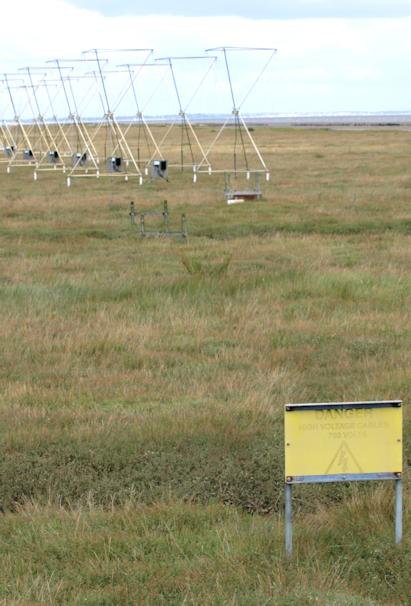
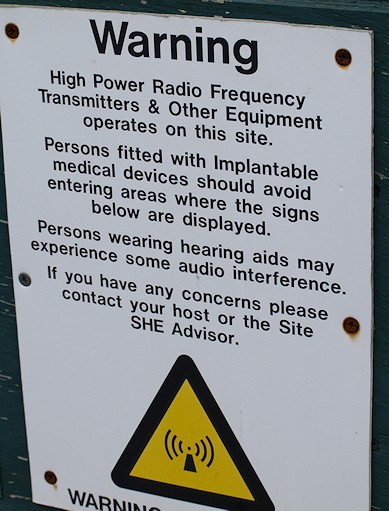
I come to a place where there are strange structures on the marshland. I had seen them from some distance away. Too small to be electricity pylons, too frail to be pumps or windmills, too permanent to be farm watering devices; I had no idea what they were. warning signThen a warning sign identifies them as “High power radio frequency transmitters” and warns me that it would be dangerous to be here if I had an implantable medical device. What these transmitters do, I have no idea. Maybe they operate some of the sluices and drainage systems. Maybe they control offshore structures.

I continue on, consulting my map frequently. There is little opportunity to drive a car close to this particular section of coastal path. But at one point a footpath leads inland and meets a track. The track connects a couple of farms and, I presume, be accessible by car. This is where I am planning to meet my husband.

I find where, I believe, the footpath starts. There is no footpath sign, but there is a small, rickety footbridge crossing a water-filled ditch and with a vague path leading across a farmer’s field. I lose the path in the field and end up in a ploughed area with sweetcorn plants. I stumble along uneven ground until I find a track. I hope this is the right track. I hope there is access for cars. If I am wrong, I may have miles further to walk to find a road.

Then I see him. There, walking to meet me, is my husband. I am very relieved. This was the right track after all. And he has managed to find it and drive the car to within a mile of the coastal path.

Back at the car, I change out of my walking boots. We drive to Tillingham – a very pretty village – with a pub that serves late lunches. After a good meal and a rest, it is time to head home.


Stats: miles walked = 9.1 miles

Posted in 04 Essex | Tagged , , , , , , , , , , , , , , , , | 10 Comments

23. Maylandsea to Bradwell

Boats at Maylandsea, Ruth's coastal walk in EssexIt is a stormy Sunday; the last bank holiday weekend of the summer and the weather is suitably wild.

From Maylandsea, I set off walking on the sea wall. There are boats moored here but, perhaps due to the weather, this small marina has an air of dereliction and abandonment. I see no ships sailing – it is too rough.

As the path winds along the sea wall, I come to an area where the wall has crumbled. There is no obvious diversion of the path, just a “path closed” sign. I decide to continue, picking my way carefully along the crumbling edge and then climbing over a pile of loose earth and gravel, heaped up as a temporary barrier to the sea.

Luckily, this dangerous clamber over crumbly ground doesn’t last long. I am soon back on the official path. But, perhaps because of the obstruction, this section is very overgrown. The grass is long and I cannot see my feet. I am vaguely worried about snakes but reassured by remembering that adders like dry grassland, don’t they?

Across Mayland Creek, Ruths coastal walk

Ahead I see a figure of a man. He is dressed in shorts and long hiking boots and is sitting on a tree trunk. Another walker! He tells me he often does this walk and loves it. He often sees hares dashing around in the marshes and, sometimes, spots a sea harrier. The one creature he doesn’t like, he says lowering his voice, “Are the slithery things.” And he moves his hand to mimic the unmistakable wiggle of a snake. I smile and tell him about my walk. He wishes me luck; and I walk on.

Ruined Jetties, Mayland Creek, Ruth's coastal walk, Essex.
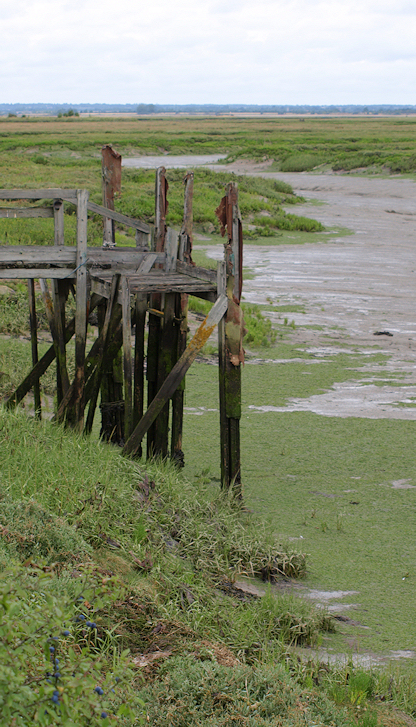
The main obstacle on my route is Mayland Creek. I follow the path down the creek, passing ruined jetties, until I can, eventually, begin to make my way up the far bank. At least I am sheltered from the worst of the wind during this inland detour. This section of path corresponds with St Peter’s Way, one of the long distance footpaths that criss cross the British mainland. I meet nobody along the way.

Half way up the creek, St Peter’s Way heads off to the East, passing inland to meet the coast near Tillingham marshes, before heading up along the coast to end at St Peter’s chapel. I will meet the foot path again, hopefully tomorrow.

Mouth of Mayland Creek, Ruths coastal walkIn the meantime, I continue along the lonely bank and, eventually, reach the mouth of the creek. Here is a campsite. There are tents blowing in the fierce wind and a few people out, braving the blast, to look at the sea. I stop and have a snack, interrupted by a friendly dog, bouncing up to greet me and hoping, I presume, for some of my snack. I am too hungry – and greedy – to share.

Continuing along the sea wall, I can look across to Osea Island. And ahead I can see Bradwell power station, looming in the distance, further away now then it was when I set off from Tollesbury, a few walking days ago.

I round another creek. The tide is. The sea wall is well cut and the grass is shorter here. The walking would be easy if it wasn’t for a gusting, sideways wind that continually buffets me, threatening to blow me off the wall. I try to pick up my pace.

Then, suddenly, I come to a dead stop. I was looking out to sea and the foam tipped waves. But my peripheral vision must have picked up the danger and some primitive part of my brain had temporarily taken control and brought me to a halt.

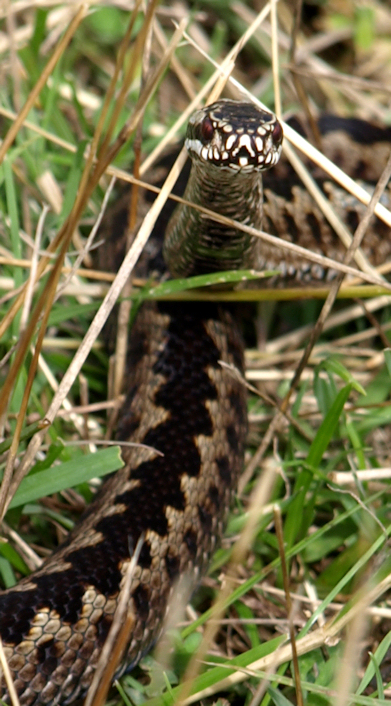
Adder, Ruth's coastal walkAhead of me, about two feet away, crossing the path, is a snake.

I know very little about snakes. But if I had to make up a venomous snake, it would look like this one. It is white with black zig-zag markings, about 18 inches in length, with a body considerably thicker than my thumb.

It senses me and stops too, half way across the path. Then it coils itself up and turns to face me. Tongue flicking in and out. Two pits (are they nostrils?) opening and closing behind its mouth. It is sniffing me – no, it is tasting me.

I do what all good bloggers would do in the situation. I take one step back, swinging my rucksack off my shoulders, while keeping a steady eye on the snake and its flicking tongue. A quick unzip and I have my camera out.

My hands are shaking and my body is buffeted by the wind. It is difficult to focus in these conditions. I take a number of shots before the snake, with one last dart of its tongue, turns round and slithers back the way it came, off the path, down the bank towards the sea.

Considerably shaken, I swing my rucksack back up across my shoulders and continue on. Now my eyes are glued to the path, constantly scanning for snakes. I am very unsettled.

First of all, I thought snakes were frightened of humans. I have assumed that snake hear the vibrations of our footsteps and would run away. This snake wasn’t frightened. And he didn’t run.

Secondly, the grass here is short. But what would have happened if I stepped close to the snake in long grass? He was coiled up above the level of the top of my boots. If it was an adder, and I wasn’t sure, I would have had a nasty bite on my ankle. And I was miles away from a road or path.

I tried to remember the case of an adder bite I had seen when working as a junior doctor in Southampton. A young lad walking in the dry grass of the New Forest had been bitten. I remembered his swollen, bruised leg. But the swelling didn’t happen immediately, taking time to develop. Perhaps I would have been able to limp back to a road? I wish I had a stick – not to attack the snake with, that did not occur to me – but to lean on in case of an adder bite.

Now I come across an obstruction on the sea wall. A fence bars my path. There is a sign, too faded to read. And barbed wire.

Through the fence I can see children’s play equipment on the bank and a shed or out-house.

I would have walked around on the sea-shore. But the tide is too high and there is no way round.

Pulling my map out, I see the official public footpath deviated off to the right some time ago. I hadn’t noticed and hadn’t seen any need to check my map when the route appeared so clear. Damn it! It was a long way back and, I realise, through snake infested territory.

I cursed the inconsiderate land owner who has commandeered this section of bank. I cursed the tide for being high. I cursed myself for being complacent with my map reading.

Then I see that I can cut across a farmer’s field towards the road where the footpath runs parallel to the sea bank. There is a gate I can climb over and a short grassy track to follow. The sun comes out. I bless the farmer and set off.

Half way across the field, I come across a rabbit. It is sitting with eyes closed, dozing in the sunshine. I approach within a couple of yards, then, realising I could frighten it to death if I got nearer, I call out, “Hey bunny”. The rabbit leaps into the air as if on a spring and shoots off across the field, his tail bobbing behind.

Picking up the footpath as it runs along the road, I see a sign adjacent to the fenced off area. “No entry. Nature Reserve.”

I feel very angry about the sign. Clearly this was not a nature reserve, but was someone’s private garden, albeit overgrown in parts. Presumably they put up the sign so that well-mannered hikers would be deterred from crossing their land. Oh, I do hope soon we will have legislation passed to establish a proper coastal route around our shoreline.

Passing through a small marina, I reach the sea wall again. Now I am approaching a small village, St Lawrence, and my rendezvous with my husband for lunch.

We sit outside, overlooking the sea and have a drink. I show him the photographs of the snake. He is suitably impressed and then concerned. Then the sky darkens and we scuttle indoors to eat our lunch as the rain pours down outside.

Private gardens across sea wall, Ruth's coastal hikeAfter the rain, I set off to follow the sea wall again. But I can’t find a way through. Next to the pub is a car park and, on the other side, the sea wall has a fence across it. The tide is still high and there is no way round. I am forced to walk along the road. I wander around a housing estate until a kindly lady directs me to a track leading to the sea wall. At the end of the track, I see the footpath ahead but my route is barred by a green area of open land with signs saying “No public right of way.” I ignore the signs and cross the small area of private property to reach the footpath. Another lady, walking her dog, tells me that you can walk along the footpath all the way to the pub, but you have to go down off the bank onto the shore to get past the gardens. This is impossible with the tide high as the water comes up to the bank.

Again, I curse the landowners who have built houses close to the bank and taken the sea wall as part of their gardens.

Bradwell Power Station, Ruth's coast walkThe rest of my walk passes uneventfully. I walk along the bank in the fierce wind, heading towards the Bradwell power station. To my left, I look over the River Blackwater to Tollesbury marshes and, beyond these, West Mersea in the distance.

As I reach Bradwell, I hear a screaming noise. It is the wind, shrieking, as it blows through the rigging of the ships in Bradwell Marina. The noise is incredible.

Ship against sea wall, Bradbury marina, Ruth's coastal walkThen I see a ship in trouble. It is a sailing ship with a deep keel, I suspect, up against the sloping concrete sea wall. The wind is blowing it against the wall, while the tide is going out – threatening to maroon the boat and to damage its hull. A small motor boat is alongside. The man on the ship is throwing a line to the man in the motorboat. The motor boat man secures the rope and tries to pull the boat free, churning up the water and whipping up a spray. The sailing ship does not budge. He slackens the rope and comes alongside the ship to talk to the man on the ship.

I would like to stay and watch to see what happens. But I am tired with the wind and the exertion of the walk today. I leave the unhappy scene and make my way around the edge of the marina. There is some redevelopment going on here and ground has been churned up by heavy machinery. My boots instantly become caked in clay-like mud and my feet feel heavy and cumbersome.

Trudging through the marina in my weighty boots, heading towards my husband’s waiting car, my ears are assailed by the noise from the wind – howling, shrieking, roaring, clanking through the rigging. The ships seem to be alive and screaming.


At home, I check the photograph of my snake on the Forestry Commission’s web site. Yes, it is an adder, a male adder. I also learn that this is a protected species.

Miles walked = 13
Deviations due to appropriation of sea bank by householders = 2
Adders seen = 1

Posted in 04 Essex | Tagged , , , , , , , , , , , , , , , , , , , , | 3 Comments

22. Maldon to Maylandsea

Heybridge Basin, Lock. Near Maldon Essex. Ruth's coastal walkHeybridge Basin is quieter today. Last time I was here, the pubs were open and the walkway was crowded. Now there is a fundraising event, with stalls being set up on the grass on either side of the lock.

I have plenty of time for the first section of my walk today and I linger to take photographs. Then I walk over the top of the lock gate and begin my walk around the coast, heading back into Maldon. There are a few people out, walking their dogs.

To my left, over the water, I can see Maldon. There is a lovely green area, pubs and cafes. It looks very picturesque. Maldon, Ruths Coastal walk around the UK

To my right are fields and a nature reserve, giving way to a new development of town houses. The path then leads through an industrial area, reaching a road, crossing a bridge and then back along a quayside walk.

Promenade Park, Maldon, Ruth's coastal walkI reach an area where there are pubs, cafes and a lovely, large Park. Promenade Park is a wonderful open space, overlooking the water, with a large duck pond and fountains.

I phone my husband and we meet at one of the pubs to enjoy a delicious meal, eaten outside in glorious sunshine.

After lunch, I walk through the Promenade Park, passing a great children’s play area, and head out along the sea wall.

Statue of Byrhtnoth, Ruth's walk around the British coast At the end of a rocky outcrop there is a wonderful modern statue of Byrhtnoth, the Earldorman of Essex, bold and fierce, looking out to sea. Byrhtnoth lived at the time of King Ethelred, 10th Century, and bravely stood against the Viking marauders, losing his life in the Battle of Maldon. The battlefield is just inland of this point.

The afternoon walk takes me along the sea wall through marshes. The path is overgrown with grass in many areas. I wonder about snakes.

Bradwell Power Station, Ruth's coastal walk in EssexThe path curves in and out and the going is tough, both physically and mentally. I see Bradwell Power Station ahead of me and realise I am no closer to this structure, as the crow flies, than I was a few days ago. In fact, I am further away now than I was at Tollesbury marshes.

I plot my route with way points using Trip Journal app on my iPhone. But, due to the bends, I have taken many GPS readings and have used my phone too much. With horror, I realise I only have a few minutes of battery left. I text my husband and let him know I am on schedule for our afternoon rendezvous.

Then the phone dies.

Path along marsh wall, Ruth's coastal walk - Essex marshes.The path is difficult to see with tall grass hiding the ground. The wall is narrow and it is easy to miss the safe, flat top and put my feet on the slanting sides. I stumble frequently. Now I am worried about twisting an ankle. And with my phone dead, I have no way of summoning help.

Eventually, I reach an area where the path is wider and the grass shorter. I see a caravan site, and there are other people walking along the wall.

Ahead of me is Maylandsea. I walk along the sea wall, concrete now. I am glad of the firm ground and the easy route, my legs are very tired. The sky is dark and threatening rain. At the end of Maylandsea promenade I join a road and walk back along it, looking for my husband’s car. I find it, locked of course, and wait under the darkening sky for him to arrive.

Oyster smack on River Blackwater, Near Maldon - Ruth's coastal walk

Vital stats: miles walked = 12

Posted in 04 Essex | Tagged , , , , , , , , , , , , , , , | 3 Comments

21. Tollesbury to Maldon

Cows and Bradwell Power Station, Ruth's coastal walk
My husband drops me off at the end of a lane and I pick up the footpath towards the coast. Bradwell Power Station looms ahead of me as I walk through fields of cows, past hedgerows flush with autumn berries and am surrounded by dancing butterflies.
Blue Butterfly, Ruths coastal walk, Essex

The wide sky above me and the empty marshes ahead, I climb up onto the sea wall. My route winds in and out, following the meanderings of the river bank, adding miles to my walk. I can see the path snaking ahead of me with wide, curving bends; marked by a rusting, red, metal wall.

Meandering bank, River Blackwater, Ruth's coastal walk

I see nobody. To my right is farmland. To my left are mud flats and the broad, gleaming river, with its far bank lost in blue haze in the distance. The only sign of human life is the small boats gliding along the far bank of the River Blackwater – their sails glinting in the distance.
Marshes and River Blackwater, Ruth's coastal walk
Later, as the morning clouds disappear and the sun comes out, people appear. I meet a few walkers. Then a grim-faced young woman passes me. I wonder why she is looking so glum on this beautiful day.

A seat comes into view – a bench. Surprised to see it here, so far from anywhere, I sit down glad of a rest. The back of the seat is covered in seabird droppings but has been washed, with the droppings smudged into a whitewash on the back of the seat. I realise someone must have tried to clean this bench.
Nick Felsted's bench - Ruth's coastal walk, Essex
I see the inscription on the back of the seat. I have got used to this new custom, erecting benches in memory to dead people. But then I take a closer look and realise this is different. “Nick Felsted 1977 -2006”. And below this are the words “His thinking place”. A young man, dying aged 29 or possibly 30; and obviously a thoughtful young man. There are no clues as to why he died so young. Later I search for his name on the internet but find no obvious matches.

Was the sour faced young woman his sister? Did she have a bottle in her hand? With water to wash the bench? I struggle to remember.

Sitting for a while, I have a drink and eat an apple. There is something very mournful about this lonely bench with its sad inscription.

Friendly sheep, on Ruth's coastal walk
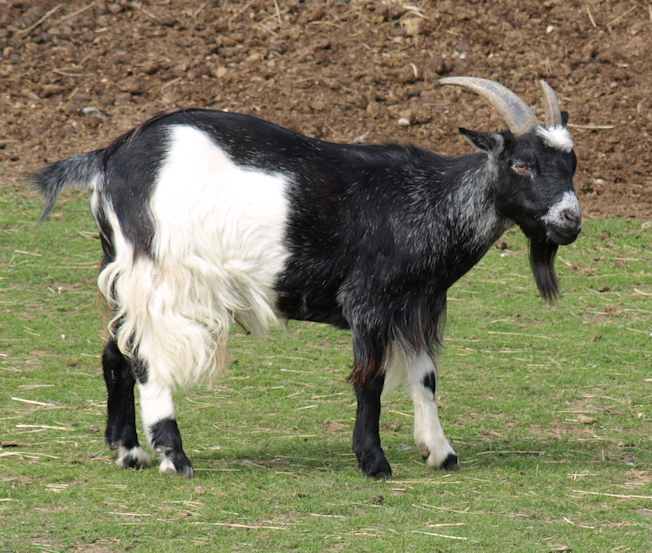
Later I meet a group of sheep – or are they goats? With enormous curled horns they look fierce. They come up onto the path and, when I put down my rucksack to take my camera out, they charge up to the rucksack – hoping for food. I am sorry I ate my apple so soon. The sheep would have enjoyed it. We make friends and they pose for photos.

Now the sun is out and the day has warmed up. Around a corner I come across a man, stripped down to a very brief pair of swimming trunks, lying on a rug across the path. He has a large umbrella up for shade but is, in fact, reclining in the sunshine. Sunday papers are spread around him. He seems surprised to see a walker and I feel a little embarrassed on his behalf. I have to walk around the edge of the bank to avoid his rug.

Towards Goldhanger, Ruths coastal walk

The path continues its winding way along the coast. I pass a few farmhouses and isolated beach huts. Then I reach a small estuary with moored boats and people emerging from woods at the end. Families are strolling along the sides of the estuary, dogs are running around after balls and children are being pushed in a variety of strollers. This is the creek leading up to the village of Goldhanger. It is time for lunch.

From the creek, a path runs up to the meet the road. This is overhung with branches, creating a lovely green tunnel; a welcome change from the exposed river bank. The pub is friendly, crowded and rather old-fashioned. I sit and read in the cool “snug” – a book about the early life of Alfred Wainwright, the famous Lake District fell walker. The biography begins with an account of his childhood and some vivid descriptions written by Alfred’s sister of his difficult family life, with his drunken father and long-suffering mother struggling to make ends meet.

Goldhanger church, Ruths coastal walkAfter a leisurely lunch, I rejoin the river bank. Passing plastic greenhouses, I stop to take photographs of Goldhanger church. The path becomes busier here – people out walking and cycling.

Now I reach Osea Island, joined to this side of the river by a causeway. The tide is out, and the causeway is just visible as a dark ribbon winding through the mud. There are cars, and then a couple of vans, crossing. They make their way slowly and carefully.
Causeway to Osea Island

Later, as I draw close to the start of the causeway, signs warn that the island is private property. I wonder what business goes on there. A concrete walkway begins at this point, and a gaggle of children head towards me, riding bikes. They are excited and shout to each other. The leader turns onto the causeway and they follow – pedalling hard and whooping with delight. I stop and watch, wondering how far they will go. Will they be stopped? Will whoever owns this island turn them back?
Children on bikes, to Osea Island, Ruth's Coastal Walk
I don’t have the patience to wait longer to see what happens and continue on my way. Some time later I am passed by a lone boy pedalling furiously on his bike. His back is spattered with mud thrown up by his back wheel. I recognise him as a member of the group of children I have just seen heading for the island.

“They are going to get killed,” he mutters darkly to himself as he speeds by. There is a note of grim satisfaction in his voice. He could mean the tide or the mud, but I suspect it is an angry parent who is going to be the “killer” in this case.

I walk past caravan sites and the walkway broadens into a promenade. Here is a pub with people spilling onto the promenade, next to a muddy beach, Mill Beach on the map. There are a host of small ships, either moored out to sea or perched in the mud.
Mill Beach, near Maldon, Ruth's coastal walk

Winding around small inlets, the path becomes narrow and overgrown with grass. My legs are growing tired and I am resentful when a group of holiday makers climb onto the path ahead of me and meander along, slowing my progress.

Now I reach a crowded area. The sea wall meets a roadway. Here there are cars, lots of people, a couple of pubs and, ahead, I can see a canal with large lock gates. Boats are moored. People are out walking and enjoying the late afternoon sunshine.

I sit on the sea wall and phone my husband. It has been another glorious day of walking – starting with wide skies and emptiness, and ending at this point, crowded with noisy, cheerful people.


Vital stats: miles = 16, blisters = 0

Posted in 04 Essex | Tagged , , , , , , , , , , , , , , , , | 10 Comments

Stage 20. Old Hall Marshes to Tollesbury

John - transporter, lunch provider, supporter: Ruth's coastal walk in Essex We drive along the bumpy track, back to Old Hall Farm. The road comes to an end at a cattle grid – where signs tell us we can drive no further without a permit from the nature reserve. We stop the car and, as I begin to lace up my walking boots, a bossy woman emerges to advise us not to block the farm entrance. We assure her we are not staying. She seems reluctant to believe us. I wonder if she lives in the rather nice house that I believe is the modern version of Old Hall Farm.

While my husband drives away, I set off across the cattle grid and along the farm track. I come to the sea wall and climb up to find a footpath stretching in either direction. Consulting my map, I realise this is not the start of my route. In fact, this is my return route. I am about to embark on a walk around a peninsula and, after 7 miles of walking, I will end up back here again – a few yards from the start of my journey today.

For a moment I hesitate, tempted. I could start here, turn right along the sea bank, and save myself 3 hours of walking around a bleak peninsula. But that would mean cutting out a section of the coast and would, according to my internal rules, be cheating.

So I climb back down off the sea bank and continue along the farm track as it meanders northwards, through a nature reserve, to the north shore of Old Hall Marshes.
Sea wall, Old Hall Marshes, looking towards Mersea: Ruth's coastal walk

The bank here is overgrown with grass, wet with dew. I decide to try out my gaiters. This new purchase was suggested by David Cotton as an aid to keeping feet dry. After struggling briefly with the unfamiliar gaiters and glad there is nobody here to see my clumsy efforts, I set off briskly, determined to make good progress this morning.

The long grass is buzzing with insects. Brown grasshoppers dart away from beneath my feet, popping up in front of my boots in a constant wave of activity the accompanies me along this section of the bank. Butterflies – blue, brown, white and multicoloured – flutter around my knees. Around my arms, small flies dart and buzz.

Spiders have laid sticky traps across the path, spinning webs between high blades of grass. As I walk, I gather a tangle of webs on the front of my trousers. Initially, I attempt to brush them off, wiping sticky strands away with my hands and then flicking my hands in the air to try to clear my fingers of the softly persistent threads. Eventually I give up. Within a few minutes, the front of my trousers begins to look like an insect graveyard – sticky webs are intertwined with displaced spiders and their prey – flies, butterflies, beetles, ladybirds… I am the grim reaper of insect life, the collector of little corpses.

Little flies extract their revenge on behalf of the insect kingdom. Their plump, black bodies appear innocently harmless and at first I think I am imagining their bites. But no, they are attacking my upper arms. I flick them away constantly.

Ships in Mersea Quarters, seen across Old Hall Marshes, Ruth's coastal walk

On my left I look over water of Salcott Channel towards a far bank and Mersea Island, visible beyond. There is nobody out here. But a small motorboat is playing up and down the channel, pulling a waterskier. To my right is farmland and then marshland with water and occasional ducks. I gather this nature reserve is a great breeding ground for water fowl, but there is little sign of them today.

The gaiters have kept my trousers dry, but the tops of my boots are wet and moisture has seeped between the laces and into the inner part of my boots. I round the eastern end of the peninsula. Here the wind picks up and the grass is dryer. The wind does me another favour too; it blows away the little flies that have plagued me.

Drying out Ruth's kit, Old Hall Marshes, Ruth's coastal walk in Essex

With the path now dry, I take off my gaiters and my boots. Hanging my socks on a convenient style, I have a snack while I change into dry socks. I have learnt the two most comforting things on a long walk are, firstly, a change of socks and, secondly, a nice bar of chocolate.

The path continues round the peninsula. There are plenty of goose droppings on the bank, making walking difficult in some sections. Part of the bank is closed to allow wild fowl to use it as nesting ground – but the nesting season has passed. Some of the geese are still here. I can see them in the distance on the inland lakes within the marshes. But the bank itself is deserted.

Old Hall Farm houses: Ruth's coastal walk in Essex

Following the bank, I am heading inland along the edge of Tollesbury Fleet. I hear music ahead, carried on the wind. At first I think it is my imagination but, no, there is some kind of concert going on in the hills ahead of me. As I return towards Old Hall Farm the music becomes more distinct – the Stones, the Beatles and other 60s songs.

Now I am back to the beginning of my walk. I am in front of the rather nice house, which I believe is the new Old Hall Farm house. There is a quay here and some small boats moored. But the tide is out and the boats are sitting in mud, not water.

The bank rounds the corner and heads back out to sea again. An elderly woman appears and strides briskly ahead. She overtakes me. I am feeling very tired and find it hard to make good progress.

Drowned trees - Old Hall Creek, Ruth's coastal walk

The sea appears to have consumed some of the fields. I see trees damaged, I believe, by salt water. Now dead, they raise bare arms to the sky.

I continue along the bank, heading towards the Tollesbury Marina, where I am meeting my husband for lunch. I can see the masts of the boats moored there, but the bank meanders in and out and progress is painfully slow.

Finally, I arrive, following the path as it winds through a boat yard and around the edge of the Marina.

Tollesbury Marina, Essex - Ruth's Coastal Walk

Beyond the moored yachts, I see a strange red boat, perched in the mud. It looks like a floating lighthouse. Later I learn this is Trinity Light Vessel, now used by FACT for spiritual holidays and retreats.

Just behind the marina is an empty basin – the old outdoor swimming pond – now unused. There are picnic seats here. I continue further along because I have spotted a pub. No, it is a private yacht club. In fact, there is no public house providing lunches at the weekend in Tollesbury. A terrible shame because this seems an obvious amenity for the village to offer to weekend visitors.

Beyond the club, I find a seat, perched high on a knoll, overlooking Tollesbury Fleet and with West Mersea gleaming in the distance. I suspect this is the best viewpoint in the whole area.
John arriving with lunch, Tollesbury Marina, Ruth's coastal walk
Now my husband arrives on his bicycle. He has stopped at the village store and has brought a wonderful picnic lunch. We eat in this lovely spot, enjoying the magnificent view.

I can see storm clouds gathering. The light fades. There is rain coming.

Ruth enjoying lunch - Tollesbury Marina, Ruth's coastal walk

We eat the rest of the food and enjoy a drink. I cannot prolong lunch any further. There is still a long walk ahead of me. This afternoon, I plan to complete this section, around Tollesbury Wick Marshes. Beyond that, the path continues along the Blackwater estuary towards Maldon, and I plan to do that section next weekend.

The sky is dark when we pack up the remains of our lunch and I say goodbye to my husband.

Water, boats and wind farm, River Blackwater: Ruth's coastal walk

The footpath ahead is deserted. The wind has picked up. The light is changing. As I head out along the bank, I can see ships moored in open water ahead and, far beyond, I can see a wind farm. This is the same wind farm that I first saw at Walton-on-the-Naze, off the coast at Clacton. The blades gleam white against the darkening sky.

Strange light on the Tollesbury Fleet - Ruths Coastal Walk
Now the strange, pre-storm light has changed the colours of the landscape. The mud has taken on a pinkish purple hue. The water looks like pale, blue steel. The inland water shines golden, like polished copper. I take photographs, not sure how the colours will look, but wanting to capture the magic of this colour change.

Storm clouds brewing, Tollesbury Wick Marshes, Ruth's coastal walk in Essex

The sky darkens further. Ahead of me I see an old pill-box with, bizarrely, a “smiley” face painted on the side. I stop here and stow my camera deep in my rucksack. Then I put on my waterproofs, making sure my iPhone is tucked deep into a waterproof pocket. Just in time. As I set off from the pill-box the rain hits my back. The sky becomes very dark indeed.

Old Pier, Tollesbury: Ruth's coastal walk

Luckily, the rain stops some few minutes later. Just as I reach a point on the walk I have been looking forward to. Here is the remains of an old pier. Once upon a time there was a doomed attempt to launch Tollesbury as a seaside resort to equal Clacton and others. Build a fine pier and the trippers will come. The locals hoped boats would dock here, perhaps bring tourists from other resorts. They even built a light railway, to link the pier with the village.

Sadly the venture was doomed and the remains of the pier were blown up at the start of World War 2, to prevent the structure being used as a landing post for German invaders. Now all that remains is the base of the structure – visible in the mud with the tide out. There is a little sign, explaining the history of the pier venture and also describing the wildlife that inhabits the area, now undisturbed by tourists.

Beyond the pier I can see the menacing silhouette of the large building. I first noticed this building at the end of my last walk. From the map it is clear that this must be Bradwell Nuclear Power Station.
Bradwell Power Station, silhouette - Ruths coastal walk
I later learn that Bradwell is no longer in use, being one of our first nuclear reactors to be closed down in 2002 and now in the process of being decommissioned.

Just beyond the remains of the pier, I turn inland, following a footpath that takes me up the side of Mill Creek, close to the route of the old dismantled railway. From there I follow the footpath to a farm track and then reach the end of a narrow road.

As I walk through the late afternoon sunshine, I wonder what it was like for the local people when they found out that their pier was to be blown up. I wonder if there were children, or grandchildren, of the original builders who witnessed the final death of this doomed dream. And now there is the demise of the nuclear reactor too. Our human projects seem puny and fragile under the weight of this wide sky, swamped by the vastness of this empty landscape.


Vital stats: blisters=0, wet socks=2, miles walked=12

Posted in 04 Essex | Tagged , , , , , , , , , , , , , , , , , , , , , , , , | 10 Comments

Stage 19. West Mersea to Peldon to Old Hall Farm

Boats in Strood Channel, Mersea, Essex - Ruths coastal walk It is a beautiful morning. I walk with a light heart along “The Hard”, passing the Oyster bar from last night – shut now – and walking along the quiet road as it follows the coast. The tide is in and the boats, marooned on the mud yesterday evening, are now bobbing on gentle waves. There is a Sunday morning feel to the air. And now I have the distinct impression we really are on an island. The houses are quaintly old-fashioned. I pass another shack with signs advertising fresh sea food, again looking distinctly unimpressive from the exterior. It is closed at this early hour but, I gather, sells wonderfully fresh, tasty food.

Path towards The Strood causeway, Ruth's coastal walk.

The road turns away from the shoreline and I pick up a footpath, continuing along the sea wall towards The Strood. The Strood is a causeway, covered at high tide, and the only road link between Mersea Island and the main land.

The first part of the footpath is wide and well trodden. There are dog walkers out, enjoying the soft morning breeze. I meet several cyclists and am nearly run over by a small boy, pedalling furiously ahead of his family. “Watch out!” they call, as he skids to a halt in front of me. I help him straighten his bike but he is embarrassed and scowls at me, keeping his face down. I walk on.

To my left is The Strood Channel with sailing boats moored. There are no jetties or docks here. To access these ships you would need to take a small boat from further up the shoreline.

View of The Strood causeway, to Mersea - Ruths coastal walk

The path becomes more overgrown and lonelier. Ahead I begin to see a dark block running across the water. Ah, this must be The Strood causeway. I can make out cars passing along it.

The footpath ends at the road leading out of Mersea and I am forced to walk along the tarmac until I reach the causeway itself, where a footpath exists. There is seaweed strewn across part of the path; a reminder that this road is covered at high tide.

Coming towards me is a young lady on a cycle. She is wearing a skirt, billowing out behind her. Looking hot and flustered she returns my smile with a nodding grimace. “He didn’t wait for me,” she wails as she struggles past. Who didn’t wait? Boyfriend? Husband? Brother? Whoever it is, there is trouble ahead.

Dead crabs, along the causeway - The Strood, Ruth's coastal walk At the far end of the causeway I notice a curious sight. Along the side of the bank, adjacent to the footpath, is a mess of churned up grass, mud and dead weeds. I notice, amazed, that there are hundreds – no, thousands – of dead, small, white crabs in this debris. They lie on their backs with their little legs pointing towards the sky.

Why? What are all these crabs doing here? I wonder if the marshy area just adjacent to the path has been dredged. Maybe some machine scooped up the weeds and mud, depositing the resulting mess, crabs and all, on the bank. Or was it the tide, churning up the bottom of the muddy pools and throwing the debris up here? I don’t know. It is rather sad to see so many tiny crab carcasses displayed in this way. I take a photograph of their little white bodies.

At the end of The Strood, the next part of my walk takes me along a road towards the village of Peldon. There is no footpath marked on my map and I am not looking forward to walking on the road itself. Then I notice a path leading to the raised bank along the side of the marsh and, for a short time, I attempt to follow this. Unfortunately, the path ends up at the bottom of some private gardens and the bank ahead is fenced off. Here, where common sense dictates that there should be a coastal path, I find private property and no way through.

With heavy heart I retrace my steps and join the road. Cars hurtle past me and I am very glad to find where a quieter road forks off to the left, leading to Peldon. Luckily there is only light traffic along this road and, despite my bad-tempered mood, I find that I enjoy the walk.

Peldon village sign, Ruth's coastal walk

Peldon village is not unattractive, but has no heart and no soul. I arrive early and hope to buy a Sunday paper to read in the pub before my husband joins me. There is no shop in Peldon. I walk around the village in a great circuit. Nothing. Just the pub. This, conveniently, has some papers outside and I sip a cider and read, waiting for my husband. He has been caught in a rain storm and has had to shelter. In Peldon, we had a few spots of rain, but it is now fine and sunny.

The food at the pub is excellent and after lunch we linger, reading the papers and enjoying the warm sun.

The next part of my walk follows the road. I need to reach the coast again, but have to detour inland because of the absence of footpaths. This is unpleasant walking. Cars hurtle past me and the road is busy. There is no pavement and no grass verge – just ditches and tall hedges.

I walk on the righthand side of the road, facing oncoming traffic, as advised by the Highway Code. This is somewhat terrifying. The drivers in the approaching cars appear to stare straight through me and swerve at the last moment, or slow down if they are forced to give way to oncoming traffic, glaring at me. I begin to feel I am playing a game of “chicken” with the cars. They wait until the last moment to swerve or brake, hoping that I will jump into the ditch or into the hedge. Eventually, I decide to walk on the left, with my back to oncoming traffic. I can tell the cars are coming, because I can hear them. But I no longer have to eyeball irate drivers.

Great Wigborough village sign, Essex, Ruth walks the coast I walk through Little Wigborough and through Great Wigborough. Sometimes there are pavements, but mainly I am forced to walk on the tarmac itself.

Stopping regularly, whenever there is a piece of grass to stand on, I keep checking my map. Joining this road on the left, somewhere, is the footpath that will take me towards Salcott-cum-Virley and I don’t want to miss the beginning of this path.

A young man towing a jet ski is forced to slow down in his giant 4×4 monstrous car. He winds down the window and delays his journey further by telling me that I should be walking on the other side of the road, then roars away. Of course I should be walking on the other side. But was he imparting this bit of walking wisdom for the sake of my safety? I think not. He was simply irritated because I was on his side of the road and he had been forced to slow down.

I curse all Essex drivers and carry on. I have no choice.

Footpath to Salcott-cum-Virley, Ruth's coastal walk

Finally, I see the footpath sign. What a relief! It is a good job there is a sign, because I would have missed the footpath otherwise. The verge at this point is shoulder-high with nettles. Wishing I had a stick, I force my way through the nettles to the hedge and discover a dilapidated style. Over the style, and to my surprise, I find the kind farmer has created a wide footpath along the edge of his field.

It is wonderful to be off the road and I enjoy this walk through the fields. I see a church spire ahead of me – Salcott-cum-Virley church, I presume.

The footpath ends in a farmyard. I walk between large barns. There is a great noise – pigs squealing and cattle bellowing. There is also a very strong smell of manure. Unlike the outdoor pigs in Suffolk, these pigs have a much more crowded and, probably, unpleasant life. I see some young pigs in one of the barns. They are charging around in great groups – squealing and grunting – butting into other pigs and generally behaving badly. It reminds me of something. What? Ah, yes. A secondary school playground.

Coming out of the farmyard, I meet an elderly couple. They are consulting a map and we stop to chat about the large number of footpaths that lead into this village, Salcott-cum-Virley. I wonder if this village was once a place of some importance, to have so many foot paths lead here.

The couple was keen walkers. The man tells me about some of his expeditions in his youth, when he followed long distance footpaths for miles on end. Now they confine themselves to exploring villages.

Salcott-cum-Virley, walk to sea wall.

I walk through the village and am passed by a lady on a bicycle with a dog on a lead running alongside her. At the end of the village, I find the footpath leading to the sea bank. The path leads through a field and I notice the bike against the hedge at the entrance to the field. The sea bank is deserted apart from a figure in the distance, coming towards me. I realise it is the lady, returning with her dog from a short walk along the bank.

For the rest of my walk along the bank, I see nobody. After the hustle and bustle of the road, I am relieved to be alone again – just me, the mud and the distant sea.

View back to West Mersea, Ruth's coastal walk

Now I get a good view across the marshes towards West Mersea. Strange to think I was there a few hours ago, walking along The Strood Channel. I am only a few miles away from the beginning of my walk. Just a few minutes if I was a bird and could fly. But on two feet, forced to detour around the estuary and thwarted by the lack of footpaths, it has taken me many hours to get here.

Bradwell Power Station, from across the marshes

As I head eastwards I notice a large structure some distance away. Separated by some miles of marsh and farmland, I am not sure what it is. Squat and bulky, it hovers on the horizon. Perhaps my walk will take me there?

I consult my map and turn off the sea bank along an established foot path, leading towards a building and a track that connects to the road again. The building is marked as “Old Hall Farm”. Beyond this there are Old Hall Marshes and there the walk continues for many miles around a peninsula. But, it is time for me to finish this walk.

Passing through the beginning of a nature reserve, some of which is closed to public access, I follow the track to Old Hall Farm. Here the track widens and I leave the nature reserve. Passing some isolated residential building, I follow the roadway until I see my husband’s car approaching. Time to stop.


Vital stats:

  • Blisters = 0
  • Miles travelled = 12
  • Dead crabs seen = several thousand
  • Close encounters with cars = too many!

Posted in 04 Essex | Tagged , , , , , , , , , , , , , , , , , , , | 9 Comments

Stage 18. Jaywick to West Mersea

Circus at Jaywick - Ruths coastal walk

St Osyth Beach, Jaywick, looks better in the morning light. The karaoke pub is not functioning at this hour and there are young families and older couples enjoying the early morning seaside air. There is a circus here today – with tents laid out in a nearby field.

I walk along the seawall, heading westward to a place marked on the mark as Lee-over-Sands, at Colne Point. The foot path follows a raised bank, someway inland from the beach. Between the beach and the path is a marshy area. Then I notice some signs informing me this is a naturist beach. I see a few distant figures on the sand, but cannot make out if they are wearing clothes or not.
Red sailed ship, Essex coast. Ruth's coastal walk
Beyond the beach, out to sea, I notice a beautiful red-sailed boat, making slow progress in the light wind. As I walk, I keep pace with this ship and it becomes my constant companion on this stage of my journey.

Across marshes, looking towards Mersea Island - Ruths coastal walk, uk.The sea wall path is well-kept and I make good progress. But Lee-over-Sands is a disappointment. The houses are rundown with an unloved feel to them and gardens cluttered with broken toys and discarded furniture. There is an abandoned house, collapsing in ruins, just adjacent to the path. At Colne Point there are signposts declaring this is a nature reserve. Maybe it is the time of year, but I see little evidence of anything interesting in this dismal place. There is a solitary car in the car park with a woman reading a newspaper. Otherwise there is no sign of life. I am glad to leave Lee-over-Sands behind, as I follow the bank and head northwards.

Now the path is overgrown with grass. I cannot see where I put my feet and I suffer my usual anxiety about snakes and, the more real danger, of twisting an ankle. To my left is reeds and marshes with water birds and, beyond the marshes, I notice the red sailed ship has rounded Colne Point and is sailing parallel to my path again. To my right are farmers fields and, as my nose identifies before I actually see it, a sewerage works.

Path through the corn fields - Ruths coastal walk.

The path becomes even more overgrown. I come across a sign giving information about the nature reserve and showing a map with various walking routes. I was expecting to leave the bank at this point, but the nature reserve map indicates that the way ahead along the bank is a “permissive footpath”, meaning that I could continue along the bank, even though this is not an official “public footpath”. I would like to continue, but the path at this point is very overgrown with grass and I realise my progress would be very slow and difficult. I make a decision to leave the bank and follow the official public footpath as it heads inland across fields.

Cleaning out ditches - Essex, Ruths coastal walk, UK.I pass men clearing out a ditch, the first people I have seen since the woman in the carpark. My footpath becomes a narrow trail through high corn. Luckily, people have passed this way before and the route is visible – just. After a while, I realise I have lost the path. No matter. I follow wide farmers tracks along the edge of fields and end up, eventually, rejoining the official path at Wigboro Farm. I smell the farm before I see it.

Now I walk along tracks and join the road that leads into Point Clear. Point Clear is a largish village and there is no sight of the sea, until I round a corner and find a footpath that leads down to the shore.

Here is a small beach with families out enjoying the sun and sand. Houses line a narrow promenade that runs along the edge of the beach and signs indicated that this is private property, over which the owner allows right of way. I am grateful to the owner for this privilege, but I am forming the firm opinion that sea access should always be a public right. I know there was legislation planned to create a coastal walk around England and I hope the new coalition government will continue this scheme and allow this legislation to pass through parliament.
Point Clear - Ruth's coastal walk
Growing tired, I am looking forward to finding the pub, marked on the map – the Ferry Boat Inn. The path rounds a corner and here is Stone Point, with a muddy beach, a car park and an estuary with moored boats. Across the water is Brightlingsea, where I see modern houses have been built and there is a buzz of activity as boats come and go and holiday makers wander close to the shore.

Eventually I find the pub. It is a low, rather unattractive building. But the garden is pleasant with shady umbrellas and the food is very cheap. My husband joins me, having cycled here.

After a leisurely lunch, we make our way to the shore. From my research on the internet, I know there is a small passenger ferry that will take us across to Mersea Island – and it will take bikes too. I have been instructed to phone up when I need the ferry and they will come and collect us – a wonderfully informal system. I hope it works.

I find the number on a piece of paper in my rucksack and punch the number into my mobile phone.
“Ferry,” says a male voice.
“Can you come and pick us up please?” I ask. “There are two of us and a bike.”
After a moment’s hesitation, the man says in a somewhat irritated tone, “I am not a taxi service you know.”
My heart sinks. This dial-a-ferry notion seemed too good to be true.
“I’m sorry,” I say and hang up.
Now what do we do? It is a very long walk by land and we have bed and breakfast accommodation booked on Mersea Island.
Then I look at the paper again and realise my mistake – I phoned the Ferry Inn Pub – not the real ferry.

I dial the right number and get a far more helpful reply. Yes, the ferry is on its way.

We watch the ships coming and going as we wait on the shore. There is nothing to indicate that this is a ferry stop and I hope we are in the right place. A small boat chugs by with a man in brown uniform sitting at the tiller and the words “Harbour Master” painted on the side. Later it returns towing a small sailing ship with a man and his son aboard. The young lad is looking in admiration at the harbour master. His father is sitting sullenly with arms folded, obviously wishing he was somewhere else. I wonder what calamity befell this outing and resulted in this unwanted rescue.
Offshore Windfarm Boat - Ruth's coastal walk.
A large boat appears. It has come from the offshore wind farm and carries workmen wearing safety helmets. They yell at a yacht moored on a wooden pier – “Hey, that is our berth.” The young men on the yacht ask how to secure a berth and one of them takes out a mobile phone as the workmen dictates a number. They cast off and move away, allowing the tug to dock.

We watch as a small motor boat comes alongside an elegant yacht. The man on the boat throws a line to the crew on the yacht. With the line stretched taut between them, the small boat begins to move backwards from the yacht, its small motor churning up the water in a frenzy of effort. What are they doing? Then we realise – the yacht is listing badly and appears to be stuck on a submerged sand bank. After a brief period of straining, the yacht suddenly lurches and then glides gracefully forwards. Success. It is free.

Ferry, Brightlingsea - Point Clear - Mersea Then we spot a small craft heading across the channel from Brightlingsea. Ah, here is the ferry. It is an ugly little beast of a boat, but we are pleased to see it. The ferry manouevres so that its back end is beached on the muddy sand. Then there is a whirr of motors and the back panel of the boat lowers itself downwards and outwards to form a ramp. This gives access to the inner part of the boat, an uncovered area with two benches facing each other.

We take our seats, my husband balancing his bike across his knees, and head off. There are 8 other passengers and, strangely, there is a “stewardess” who ushers us onboard and sits with us. The pilot is perched high above us and concentrates on piloting the ferry through the mass of moored ships. To my surprise, we head back to Brightlingsea, instead of towards Mersea. I gather from the “stewardess” that there were more people waiting on the jetty than could be accommodated in the ferry. Why are we going back? As we approach, I see a queue of people waiting. They look at us with anticipation, but their faces fall when they realise the ferry is full.

“What is going on?” The stewardess realises we have made a mistake. The captain assumed we wanted to cross to Brightlingsea.

We pull away from the crowded jerry, leaving the disappointed would-be passengers behind. We head out across the open water and the sea becomes rougher as we leave the shelter of the river mouth. Waves splash up over the edge of the boat and we dodge to try and avoid getting wet, laughing as we get soaked by spray.

As we draw near to Mersea Island, I see we are going to pull up on a beach, where the sand rises steeply up from the waters edge. There are a number of people on the beach, enjoying the late afternoon sunshine. They seem surprised to see this strange little ferry rise up onto the beach. We disembark quickly and I take some photographs as a couple of cyclists wheel their bikes up the little ramp and sit in our empty places, ready for the journey back to Brightlingsea.

We are excited to be on the beach of this unfamiliar island. I notice the beach is covered in shells.
Shells on beach, East Mersea - Ruths coastal walk
When we reach the grass at the edge of the beach, I part company with my husband. He follows the path inland to resume cycling. I continue following the beach, heading westwards along the shore toward the town of West Mersea.

There is a low cliff, crumbling, to my right. To the left, the beach turns into mud and I see a network of groynes stretching out towards the distant water. Another attempt to prevent erosion. This area is a nature reserve with free access for roaming.
Sea defences, Mersea, Ruth's coastal walk
For the next few miles I see very few people. In the distance I see large tents in a field. Drawing closer, I walk past a camp site where young people are marching and shouting. I am surprised by the noise and the chants – but it becomes clearer as I draw near.
“Who do we love?” shouts a young man at the head of a group of younger teenagers.
“Jesus!” they shout back.

I walk along a concrete sea wall, past the religious youth camp, then past a caravan site and finally reach the outskirts of West Mersea.

Here there are the most attractive beach huts I have yet seen. They are painted in pretty pastel colours and have small balconies. In this beautiful, late afternoon sunshine, most of the huts are in use. Children are playing while the adults are lounging in chairs. There is plenty of eating and drinking.
Beach huts, West Mersea, Ruths coastal walk.
I feel tired and hungry now. The sun is sinking lower. There is no esplanade, just the huts and a glimpse of houses behind the huts. Am I in West Mersea? I consult my GPS app on my iPhone. Yes, I am adjacent to the street where our B&B is situated and, reluctantly, I leave the beach and head into the town.

That evening, my husband and I walk along the road that runs beside the sea, the “Hard”, and find an unprepossessing shack that offers sea food to eat in or take out. We sit outside and watch the sun set over the estuary and the moored yachts. We eat crab risotto and scallops, washed down with dry white wine. Just after the sun sets, a full moon rises. Moonlight glimmers on the water and lights up the rigging of the boats. Magical.


Milestone! This is the first walk I started and completed with no blisters.

Posted in 04 Essex | Tagged , , , , , , , , , , , , , , , , , , , , , | 3 Comments

Stage 17. Kirby-le-Soken to Walton, Frinton, Clacton and Jaywick

This is a glorious day of hot sun, blue sky, warm sea – and noisy crowds.

I walk along the busy road from Kirby-le-Soken to Walton-on-the-Naze. This is the hottest day of the year so far. Temperatures are going to soar into the 80s (that is the high 20s if your mind works in Centigrade). Luckily there is a pavement along this stretch of road. The marshes are to my left, behind a high hedge. Through gaps in the hedge I can see the distant sea and, beyond that, the cranes of Felixstowe. It seems a long time since I left Felixstowe – yet still so near.
View across marsh towards Felixstowe, Ruth's coastal walk
Ahead of me I see a car stop. Two young people get out and begin searching the grass verge for something. She points to various spots and he, hot and agitated, stomps through the grass – looking. Then he shakes his head, she points to another spot and the search begins again. As I draw near they both begin to shout in triumph as he emerges from the hedge holding a hub cap. They grin at each other and at me, then climb into their car and roar off.

As I approach Walton, I see smart people wearing dresses and suits – looking hot, sticky and uncomfortable as they walk purposefully onwards. They are going to church. It is Sunday.

Walton Pier is the 3rd longest in the country. I suppose I was expecting something spectacular; and am disappointed by the reality. The beginning of the pier seems to consist of a shed and, as I draw nearer, I realise that this shed houses a number of tacky amusement arcades, children’s roundabouts, dodgems, and some cheap looking cafes and bars.
Walton's ugly Pier - 3rd longest in the UK - Ruth's coastal walk
I am very hot and go into the shed area and walk through, looking for a cafe or a stall selling drinks. At the end of the covered area the pier stretches out to sea. There are fishermen and people walking. But no nice cafe and no cold drinks to be seen. I head back to the entrance of the pier and buy an orange drink in an unpleasant looking self-service restaurant. I want to sit outside, but am driven back inside by the clouds of smoke. Smokers – now banned from the indoors – have taken over the outdoor seating area.

Walton sea front - Ruths coastal walk

Refreshed by the drink, I head southwards toward Frinton. On the promenade are people enjoying this wonderful day. The tide is high and the beach is covered with water, making the promenade the main area for walking, sitting and playing. There are beach huts, doors open, with chairs and tables out on the promenade.

Further on I see people swimming in the sea. The sky is cloudless and the sea is a beautiful, bright blue – a tropical hue rarely seen in this country.

The rest of my walk follows the promenade as Walton passes and I head into Frinton. To my left is the sea with a wind farm in the distance. To my right is an endless parade of beach huts. The walking would be easy – but the promenade becomes increasingly crowded as the day progresses. I am forced to dodge tables, chairs, barbeques, toddlers, dogs, pushchairs, wheelchairs and the occasional, powered, mobility scooter.

Frinton's Greensward, Essex part of Ruths coastal walkThen I reach an area of open space – Frinton Greensward. Here people are out having picnics on the grass, overlooking the sea. And I am glad to find some convenient (and very clean) public conveniences.

Leaving Frinton and heading on to Clacton, I walk along the high sea wall. On the edge of Frinton are some amazing beach huts – accessed from the sea wall via small front decks, they are built on stilts and jut out over the beach with waves sloshing underneath. The windows at the ‘back’ of these huts look directly over the sea. Wonderful.

Amazing beach huts at Frinton-on-Sea, Ruth's coastal walk

Now I follow a quiet stretch of sea wall, between Frinton and Clacton. There are a few dog walkers and some cyclists.

When I reach Holland-on-Sea, the promenade becomes crowded again, with beach huts and people. I am tired and want to find a pub for lunch, having pre-arranged to meet my husband here. So, I leave the beach and climb upwards to a wide promenade that runs above the beach. There are houses to my right, but no sign of a pub. The promenade is also a cycle way. I wonder if I will meet my husband cycling along?
Holland-on-Sea, cycle way - Ruth's coastal walk

I walk for miles, growing thirsty and feeling hungry, passing some nice looking houses – but no pubs. Eventually I stop in a shelter and eat a banana and drink most of my water. I text my husband to let him know the bad news – there are no pubs in Holland-on-Sea. Then I set off again and, consulting my iPhone Trip app, I realise I have passed through Holland-on-Sea and am now in Clacton.

Then, ahead, I spot some umbrellas. That must be a pub. Please let it be a pub.

Striding quickly onwards, I am overtaken by a cyclist. Ah, here is my husband. We reach the pub together and sit outside in the shade. We have a roast dinner; perhaps not the most sensible thing to eat in the heat – but we are both starving. We watch people walk past. There are girls in white trousers with astonishingly large amounts of gold jewelry. This is Essex, after all.

After lunch, I carry on towards Clacton Pier, descending down to the beach again and walking along the sea wall for a while, before, tired by the noise and crowds, I climb back up to the promenade. Clacton is surprisingly pleasant. There is a park up here, with gardens and benches to sit on. And here there are good views of the pier and its small amusement park. It may be shorter than Walton, but this is a much nicer pier. Clacton Pier, Ruths coastal walk

Jet skis on Jaywick beach - Ruth's coastal walkCarrying on, I leave Clacton behind, passing another Martello tower and head towards Jaywick. The beach becomes wider with more shingle. There are jet skis buzzing on the sea. On the path, the people become fatter and have tattoos. The dogs become larger, straining on leashes. Cars drive past pumping out loud music. Instead of beach huts, there are small, tatty beach houses. Their gardens are untidy with broken toys, old furniture and discarded rubbish. I see broken windows, boarded up windows, and windows open with music blaring out.

Jaywick, road along the beach - Ruth's coastal walk
The sea wall becomes a wall, instead of a walkway, and I am forced to walk along a narrow road, flattening myself against the wall every time a car drives past. There is broken glass on the road. This is not pleasant.

Two large women in leggings and t-shirts are approaching. They are accompanied by two skinny men who have dogs on choke chains. One of the dogs keeps lunging towards the garden of a beach house, where another large dog is standing against the fence on his hind legs, barking. The dog on the chain pulls his master with each lunge, causing the man to lurch across the road at regular intervals. As I pass, one woman says, in an Essex accent made for a comedy show,

“You’d only lick ‘im to deff. I dunno why you bovv-arrh.”

I keep a straight face. Just. Welcome to Jaywick

I pass some of the last of the Martello Towers on this stretch of coast. Further on, there is a commotion ahead. I am approaching a place called St. Osyth Beach. Here people are sitting on the beach wall. There is music playing. As I approach, I realise there is an open-air karaoke bar in full swing. It is 6:30 pm.

This is where I have arranged to meet my husband. There is no escape. I sit on the beach wall and watch three young women singing tunelessly on a small stage.

My husband arrives in the car. What a welcome sight. I am glad to leave this place behind.

Swimmers in Essex - Ruth's coastal walk


Vital stats: 12 miles, max temp 82 F, 1 new blister.

Posted in 04 Essex | Tagged , , , , , , , , , , , , , , , , , | 3 Comments